
Personal Care Companies
Highlights
Olay Uses AI-Enabled Marketing To Double Sales Conversion Rate
 Skincare brand Olay has doubled its sales conversion rate by using artificial intelligence to help focus and personalize its marketing. According to Nara Logics CEO, Jana Eggers, Olay’s Skin Advisor online skin-advisor tool has engaged more than 4 million customers. Nara Logics uses for Olay the same machine learning algorithm that is used for the U.S. intelligence community, Eggers said. She also said companies planning to use AI need not hire people with data science Ph.D.’s, with software engineers usually capable of and excited about using the technology.[Image Credit: © Procter & Gamble]
Innisfree Introduces New Retail-Equipped Store In China
 Korean cosmetics company Innisfree launched its first New Retail store in China. Located at the Li Xing Shopping Plaza in the country’s Hangzhou region, the store comes with New Retail digital and interactive features. Developed by Alibaba founder Jack Ma in 2016, New Retail is designed to use technology to combine online and offline shopping “into one comprehensive channel”. It offers customers convenience whether buying through an app or at an offline store. New Retail features include Magic Mirror, an AR-enabled technology which lets consumers virtually try makeup products; Smart Skin Analyzer, which analyzes the user’s skin and recommends the best Innisfree products based on the skin report; and Vending Machine, which lets consumers buy products at discounted prices using the Taobao mobile app.[Image Credit: © Innisfree Corporation]
Kanebo Subsidiary Launches MemoMi Digital Mirror Service
 Japanese beauty brand Kanebo’s subsidiary, e’quipe, Ltd., plans to launch a service featuring the digital mirror developed by Silicon Valley-based MemoMi Labs Inc. Buyers of SUQQU brand of cosmetics can experience the service while receiving a Gankin facial muscle massage at some retail stores. According to the company, a built-in digital image recorder will record the facial massage session and sends the video to the customer’s smartphone.[Image Credit: © memomi]
L'Oreal Partners With Casino Group To Open Multi-Brand Pharmacies In Paris
 L'Oreal's pharmacy business Le Drugstore Parisien has partnered with mass retailer Casino Group to open the first two multi-brand pharmacy stores in Paris. Located in the city's high-end 6th and 9th districts, the stores sell a wide range of products, including cosmetics, dry cleaning, accessories, and snacks. L'Oreal brands, such as L'Oreal Paris, Maybelline, and Garnier, will also be featured.[Image Credit: © L'Oreal]
Lime Crime Marks 10th Year By Opening For Business At Selfridges
 Lime Crime, makeup brand with cult following, celebrated its 10th anniversary by launching its products at Selfridges' beauty department. Know for its “colorful, vegan and cruelty-free products”, Lime Crime was launched when online beauty retail or ecommerce was relatively beginning. Its popularity among YouTube beauty bloggers helped make the company popular. According to the company, its decision to launch in Selfridges was prompted by the fact that the UK is its second largest market.[Image Credit: © Lime Crime]
L’Oréal And Facebook Team Up For AR Makeup Experience Using Modiface
 L’Oréal, using its recently-acquired ModiFace solution, is collaborating with Facebook on creating an augmented reality makeup try-on experience through the social media platform’s camera products. Facebook says this brings AR into the mainstream. L’Oréal’s Chief Digital Officer, Lubomira Rochet, said that the two companies share a belief that AR is becoming an increasingly crucial way for consumers to discover brands and products.[Image Credit: © Modiface Inc.,]
My Specialist From Schwarzkopf Provides Online Personalized Hair Care
 Schwarzkopf’s new My Specialist brand claims to offer customized hair care online, based on microscopic testing, through an exclusive deal in China with T-Mall. The Henkel brand, together with the Shanghai Advanced Research Institute, has created a test that assesses the hair’s dryness and damage. This is supplemented by a questionnaire to provide an evaluation that can be treated with personalized products.[Image Credit: © Henkel Corporation]
Enhancing Its Digital Footprint Might not Be Enough For Avon
 Although Avon has been working to improve its digital image to better reach millennials, there are concerns that it’s still not doing enough. Theodore Delimaris, Associate Consumer Analyst at GlobalData, believes Avon should step up its pace of modernization and raise its sights higher. He thinks the company’s traditional doorstep approach is discouraging existing and prospective representatives. Avon has been improving its online model, with reps reporting higher average orders in the second quarter, boosted by sales in the online channel, which appeals to the millennial consumer. However, Delimaris advises Avon to think beyond modernizing its channel approach, and to consider transforming its product portfolio to be more attractive to younger buyers. [Image Credit: © PublicDomainPictures from pixabay.com]
Chanel Launches New Male Beauty Line, Starting In South Korea
 In September, Chanel will launch its first male beauty line, Boy de Chanel, in South Korea. It will feature three products: a lip balm, eyebrow pencil and a tinted fluid. The line will also be rolled out online from November on the Chanel site. The range is named after Gabrielle Chanel’s lover, Boy Capel.
L’Occitane Is Opening A Concept Store In New York
 The L’OCCITANE Group is opening a concept store for its L’OCCITANE en Provence brand on Fifth Avenue, New York. The natural cosmetics brand aims to provide a destination that will communicate to visitors its key features and encourage consumer engagement. The brand is following a “glocal” approach in creating exclusive brand experiences and has recently opened new concept flagship destinations in France, Brazil, China, Singapore, Canada and the United Kingdom. The Paris store, for example, offers food inspired by some of the brand’s iconic ingredients. Christina Polychroni, the brand’s North American Chief Marketing & E-Commerce Office, says that visitors to the New York store can use immersive installations to explore the brand’s history and signature products.[Image Credit: © L’OCCITANE Group]
Colgate-Palmolive Invests In Male Grooming Brand In India
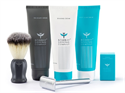 Colgate-Palmolive has purchased a minority stake in the Indian direct-to-consumer online male grooming brand, Bombay Shaving Company, as part of a series A funding round. The company, launched in 2016, now has some 80,000 customers and offers over 30 products, including shave, skincare, beard care, and bath and body items. BSC says it aims to leverage Colgate-Palmolive’s long experience to help it grow the grow the brand, and the funds will be spent on brand building, innovation and improving key capabilities. [Image Credit: © Bombay Shaving Company]
More...


Copyright 2026 Business360, Inc.